
BOGO deals explained: what buy one, get one really costs
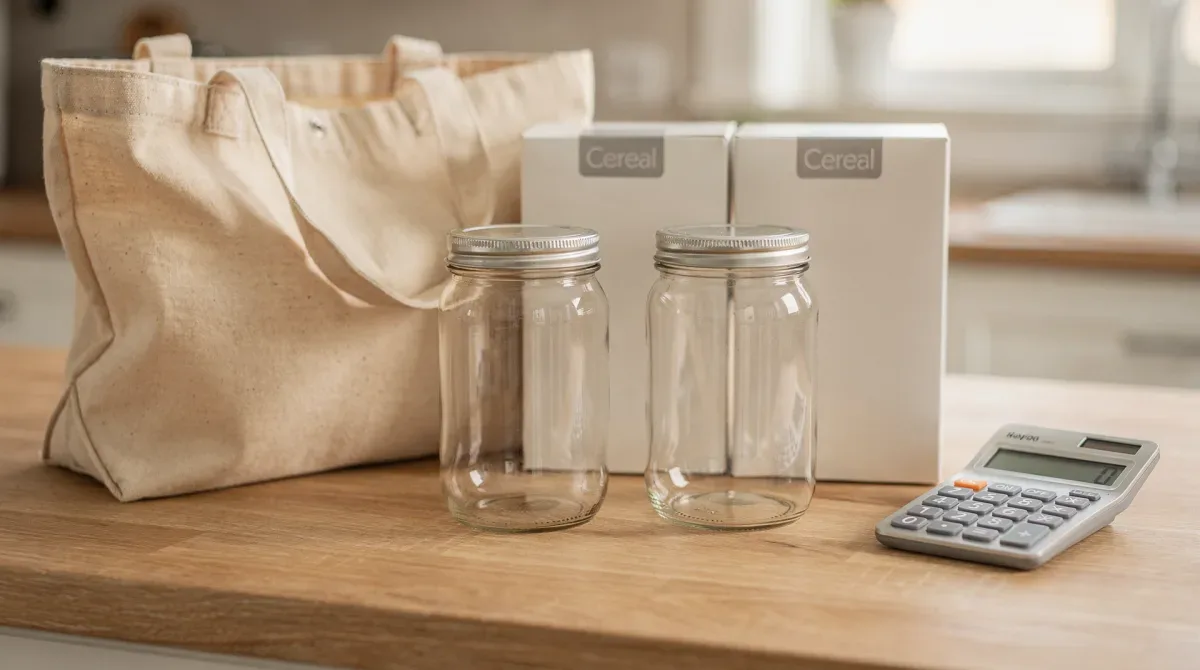
"Buy one, get one free" is one of the most familiar phrases in American retail. You will see BOGO offers on cereal at Kroger, on vitamins at CVS and Walgreens, on snacks at Target and on personal care items almost everywhere. Variations include "buy one, get one 50% off," "buy two, get one free" and "buy one, get one for a dollar."
The appeal is obvious, but the math is less so. Depending on the store's rules, you might be required to buy both items, you might get half off each item individually, and coupons may or may not be allowed on the free item. Understanding how a BOGO rings up is the difference between a real deal and a nudge to buy twice as much as you need.
The basic BOGO formats
Most BOGO deals fall into a handful of patterns. Each one changes the effective discount on each item:
| Offer | What you pay for two | Effective discount per item |
|---|---|---|
| Buy one, get one free | The price of one | Half off each |
| Buy one, get one 50% off | One and a half times the price | A quarter off each |
| Buy two, get one free | Two items' price for three | A third off each |
| Buy one, get one for a set amount | Full price plus the set amount | Depends on the regular price |
Seen this way, "BOGO 50% off" is a more modest deal than it sounds. It is helpful to translate every BOGO into its per-item discount and then compare it with the item's usual price and the store-brand alternative.
Do you have to buy both?
This is the rule that matters most and varies the most. Some stores ring up BOGO free items at half price each, so you can buy a single item and still get it at half off. Others require you to buy the full set to receive the discount, and a single item rings up at full price.
Store policies on this differ between chains and can differ between regions of the same chain. Some stores print a note like "must buy 2" in the ad, others simply describe the item as half price when you buy one. If the ad does not say, the customer service desk or the store's app can tell you how it rings up. Do not assume one store works like another.
Mix and match
Many BOGO deals let you mix products within a brand or category, such as different flavors of the same cereal or different scents of a body wash. Some require identical items. The ad usually lists eligible products or sizes, and the exclusions are worth reading because travel sizes, value packs and multipacks are often left out.
Which item is free
When mixing items of different prices, most stores make the lower-priced item the free or discounted one. If you are pairing a larger size with a smaller one, the smaller one will typically be the discounted item.
BOGO and coupons
Coupons on BOGO items are where the rules get detailed. Common situations include:
- One coupon per purchased item: many stores allow a manufacturer coupon on each item, including the free one, as long as the coupon value does not exceed the item's selling price.
- Coupon only on the paid item: some stores do not allow a coupon on an item that rings up free.
- Digital offers: a store's digital coupon may be limited to one use per transaction or per account.
Retailers publish coupon policies that cover these situations, and they change from time to time, so check the store's current coupon policy before you plan around stacking.
When a BOGO is worth it
A BOGO is genuinely useful when it lands on something you already buy and use steadily, especially shelf-stable items or personal care products with a long life. Good candidates include:
- Pantry staples your household goes through every week.
- Toothpaste, deodorant, shampoo and soap.
- Cleaning supplies and laundry products.
- Frozen foods you have freezer space for.
It is less useful for perishables you cannot finish, products you are trying for the first time, or items whose regular price has been inflated relative to competitors. A BOGO on a product that normally costs much more than the store brand may still leave you paying more per unit than you would without the deal.
What it really saves, and the catch
A true buy one, get one free is a solid discount, roughly in line with the strongest regular sales a store runs, and it can be better when stacked with coupons the store allows. The weaker formats, such as half off the second item, are still worth taking on staples but should not be confused with a half-price deal.
The catch is volume. BOGO deals are designed to move more product, and they work by getting you to buy two of something when you came for one. If the second item ends up expiring in the pantry or sitting unused under the sink, the deal cost you money. Buy for what you will use before the next time that item goes on sale.
Frequently asked questions
Can I buy just one item on a BOGO deal?
It depends on the store. Some ring BOGO free items at half price each, others require the full set. Check the ad's fine print or ask customer service at your store.
Can I use two coupons on a BOGO free deal?
Some stores allow one coupon per item, including the free one, and some do not. The store's published coupon policy is the authority, and it can change.
Are BOGO deals better than a regular sale?
A true BOGO free is roughly half off per item, which is a strong discount. Compare the per-item cost with the regular sale price and the store-brand unit price to decide.
Written by
alldailyfinds.com Editorial Team
The alldailyfinds.com editorial team researches deals, coupon policies and free-sample programs for U.S. shoppers and checks each offer against the retailer's or brand's own published terms. alldailyfinds.com is published by Holy Media Ltda.