
Clearance cycles at big-box stores and how markdowns move
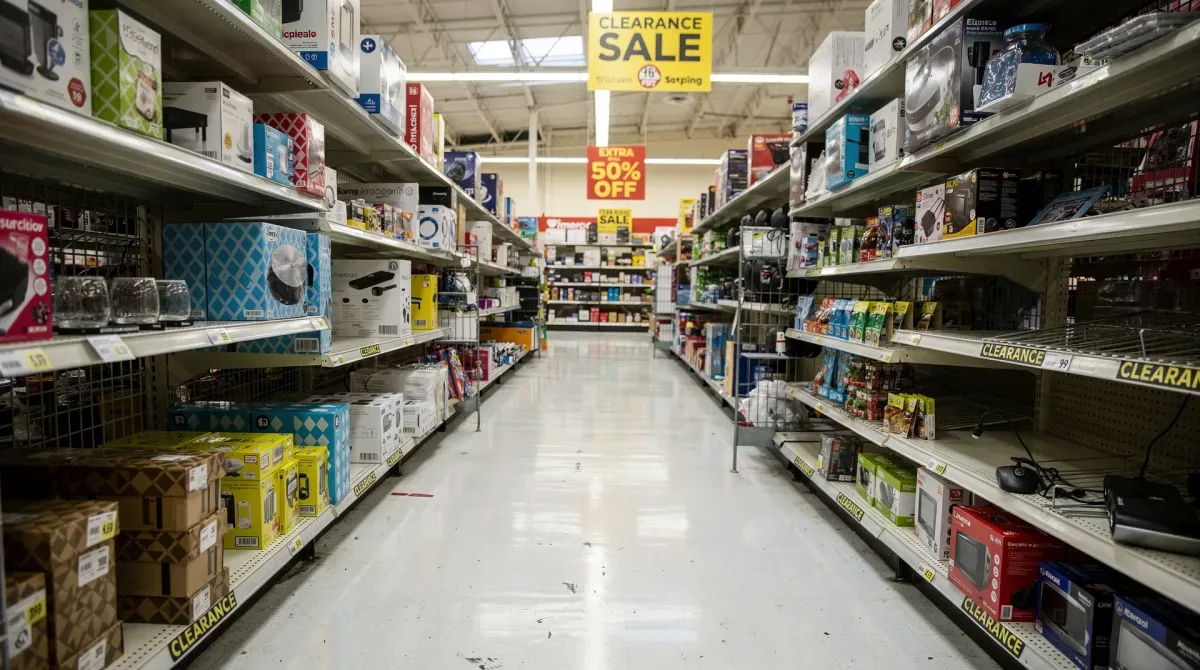
Clearance shelves and endcaps are a fixture at Target, Walmart, Kroger, CVS, Walgreens and nearly every other large store. The bright stickers promise deep discounts, and sometimes they deliver. But clearance is not random. Most retailers move unsold merchandise through a series of markdowns, each one lower than the last, until the item sells or is removed from the floor.
Understanding how those cycles generally work helps you decide when to buy and when to wait. It also helps you focus on the clearance items that matter for an everyday household, like cleaning supplies, toiletries, baby care and pantry goods, instead of being drawn to whatever happens to be marked down.
Why items go on clearance
Stores mark items down for a handful of reasons:
- Discontinued products, such as an old package design, a retired scent or a size being replaced.
- Seasonal stock after a holiday or season ends, including seasonal flavors and themed packaging on everyday items.
- Planogram resets, when a store reorganizes an aisle and some products lose their spot.
- Overstock, when a store simply has more than it can sell at regular price.
- Short dates on food or health items, which are covered by separate markdown practices in many stores.
How markdown stages generally work
Many big-box retailers mark clearance in steps. An item might first drop by a modest amount, then by a larger amount a week or two later, and finally to a deep discount before it is pulled. The exact percentages, the timing and the days of the week when markdowns happen are internal decisions that vary by store, by department and over time. They are not officially published, and lists that circulate online are best treated as rough guides rather than rules.
Reading clearance stickers
Clearance stickers often show the current price and sometimes a percentage off the original. Some stores use the sticker's percentage or a code to indicate the markdown stage. If a sticker shows a smaller percentage off, there is usually room for further markdowns. If it shows a large percentage, the item may be near the end of its run.
Scanning in the app
Some store apps let you scan a product's barcode to see its current price. This can reveal that an item has already dropped further than the sticker shows, because stickers are sometimes updated after the system price changes. If the app and the shelf disagree, ask a team member or check out at the register, where the system price applies.
Wait or buy now?
Waiting for a deeper markdown is a gamble. The deeper the discount, the more likely the item sells out or is removed from the floor. A simple way to decide:
| Situation | Usual approach |
|---|---|
| You need it soon and the price already beats the store brand | Buy now |
| It is a nice-to-have and several units are left | Wait for the next markdown |
| Only one or two left of something you use | Buy now |
| It is a discontinued version of a product you love | Consider buying a few if storage allows |
Clearance for everyday essentials
For an essentials-focused household, the best clearance finds tend to be in a few areas:
- Personal care: shampoo, body wash and deodorant in discontinued scents or old packaging.
- Household cleaning: seasonal scents of dish soap, air fresheners and multi-surface cleaners.
- Baby and kids: diapers in discontinued package counts or designs, kids' toothbrushes, bath items.
- Pantry: seasonal flavors of snacks, cereals and coffee.
- Pet supplies: treats and toys in changed packaging.
Always check expiration dates on food, medicine, sunscreen and baby products. A deep discount does not help if the item expires before you use it.
What it really saves, and the catch
Clearance can offer some of the lowest prices you will see on a given product, especially at the later markdown stages. For items you would buy anyway, picking them up on clearance can be a meaningful saving with no coupons involved.
The catch is selection and impulse. You cannot plan a shopping list around clearance, and the deepest markdowns are often on items nobody else wanted. It is easy to spend money on things you would never have bought at full price. Keep a mental list of the essentials you use and let clearance fill those needs when it can, rather than letting clearance decide what you need. Also note that clearance items are often final sale or have different return terms, so check the store's current return policy.
Frequently asked questions
Do stores publish their clearance markdown schedule?
Generally no. Markdown timing is internal and can vary by store and department. Online schedules are informal and may be outdated.
Can I return clearance items?
Some stores accept returns on clearance with a receipt, others treat clearance as final sale. Check the store's current return policy before buying.
Can I use coupons on clearance items?
Many stores accept manufacturer coupons on clearance items as long as the coupon does not exceed the price, but policies vary. Review the store's coupon policy.
Written by
alldailyfinds.com Editorial Team
The alldailyfinds.com editorial team researches deals, coupon policies and free-sample programs for U.S. shoppers and checks each offer against the retailer's or brand's own published terms. alldailyfinds.com is published by Holy Media Ltda.