
How to read unit prices on shelf tags
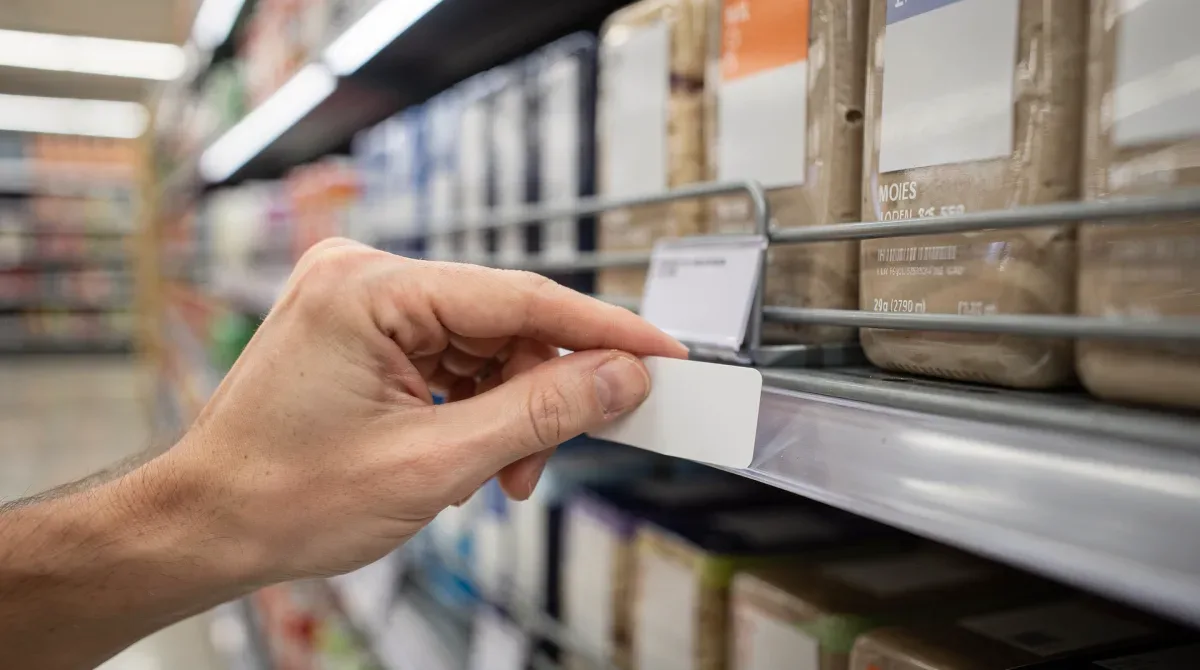
Every shelf tag in most grocery stores carries two prices. The big one is what you pay at the register. The small one, often tucked in a corner, is the unit price: what the product costs per ounce, per pound, per count, per sheet or per load. That small number is one of the most powerful tools a shopper has, and most people barely glance at it.
Unit prices let you compare different sizes and brands instantly, without doing math in the aisle. They also have quirks that can mislead you if you do not know what to look for. Here is how to read them properly.
What a shelf tag usually shows
Shelf tag layouts differ from store to store, but most include:
- The product name and size.
- The retail price, in large type.
- The unit price, in smaller type, with the unit used, such as "per oz" or "per 100 ct."
- Sometimes a sale price, a member price or the regular price.
Unit pricing rules vary by state, and some states require it while others do not, so how and where it appears can change from one store to the next.
Using unit price to compare sizes
The classic use is comparing a small package with a large one. If the larger size has a lower unit price, you pay less for each ounce. That is the starting point, not the final answer. You still need to use it before it goes bad, as with any bulk purchase.
Compare like with like
Make sure both tags use the same unit. One tag might show price per ounce and another price per pound, or one per count and another per ounce. Stores usually use the same unit within a category, but not always. If they differ, convert: there are 16 ounces in a pound.
Common unit-price traps
| Trap | What happens | How to handle it |
|---|---|---|
| Different units | One tag per ounce, another per pound or count | Convert to the same unit |
| Sale tags | Unit price may reflect the regular price, not the sale | Calculate the sale unit price yourself |
| Paper towels and toilet paper | "Rolls" vary in sheet count and size | Compare per sheet or per square foot if shown |
| Concentrated products | Ounces are not the same as uses | Compare cost per load or per use |
| Multi-buy deals | Price applies only if you buy several | Check whether you must buy the full quantity |
| Member pricing | Lower price only with a loyalty account | Know which price applies to you |
When the lowest unit price is not the best buy
- You will not use it all. Waste raises your real cost.
- Quality differs. A cheaper paper towel that needs two sheets instead of one may cost more per use.
- Storage is tight. Giant packages can be impractical in a small home.
- Cash is tight this week. A smaller package may protect the rest of your budget.
- You are trying something new. A small size reduces the risk of disliking it.
A quick routine in the aisle
- Find the product you usually buy and note its unit price.
- Look at the sizes above and below it.
- Check the store brand next to it.
- Check whether a sale tag changes the picture.
- Pick the lowest unit price you will realistically use up.
After a few trips, you will start to remember typical unit prices for your staples, and good deals will stand out on their own.
Unit prices online
Many grocery websites and apps show unit prices too, often under the main price. Online, you can sort or compare quickly, but watch for the same traps. Delivery fees, service fees and minimum orders also change your real cost per unit; they are not included in the unit price shown.
When stores do not show unit prices
If a tag lacks a unit price, divide the price by the quantity. A calculator app on your phone makes this quick. Doing it for a few staples once gives you reference points for future trips.
Teach it to the family
Unit prices are a great skill to share with older kids or anyone else who shops for the household. Once everyone knows where to look, the whole household tends to make better choices in the aisle, even on quick trips.
Frequently asked questions
Is the unit price on the tag always accurate?
Usually, but mistakes happen, and sale prices are not always reflected. If something looks off, divide the price by the quantity yourself.
Why do some stores show unit price per 100 count?
For items sold by count, like napkins or plates, a larger base unit makes the number easier to read. Just make sure you compare products using the same base.
Should I always buy the item with the lowest unit price?
Not always. Consider whether you will use it all, how it performs and whether you have room to store it. The lowest unit price is a starting point.
Written by
alldailyfinds.com Editorial Team
The alldailyfinds.com editorial team researches deals, coupon policies and free-sample programs for U.S. shoppers and checks each offer against the retailer's or brand's own published terms. alldailyfinds.com is published by Holy Media Ltda.