
In-store food sampling: what to expect and how to make it useful
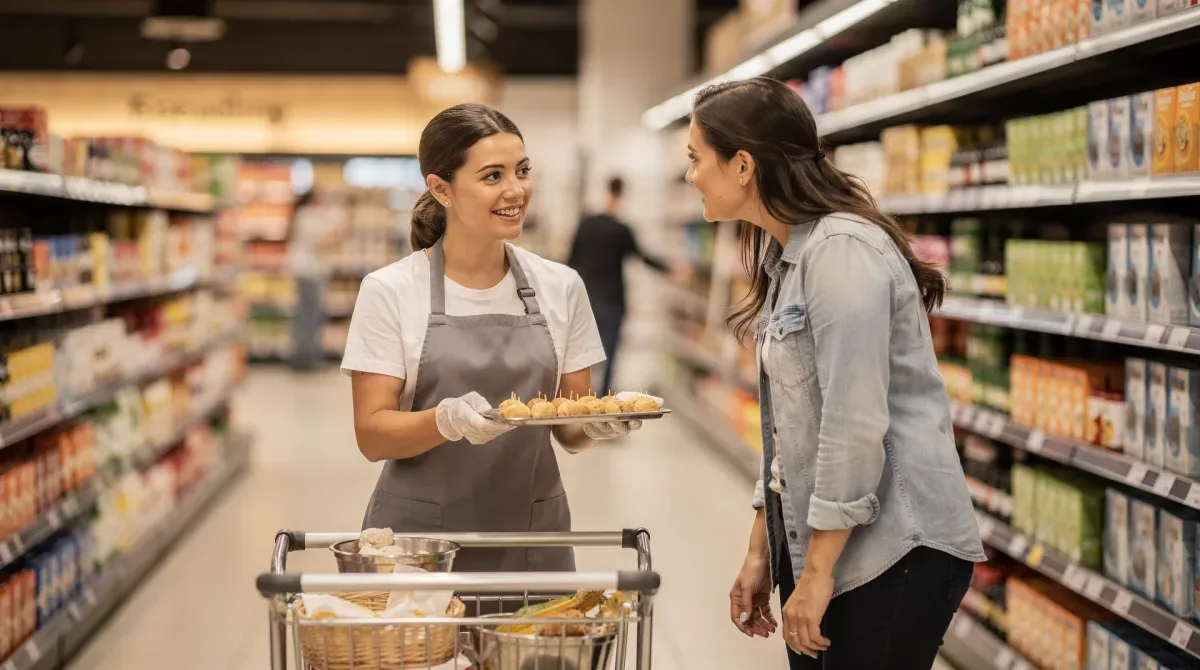
Of all the ways to get free samples, the tasting table at the end of a grocery aisle is the most straightforward. There is no form, no email list and no waiting for the mail. Someone hands you a small cup of soup or a cracker with a new dip, and you decide on the spot whether it is worth a place in your cart.
In-store sampling is also one of the most useful kinds of free samples for a household budget, because it helps you avoid the most common grocery waste: buying a full package of something new, discovering nobody likes it, and throwing most of it away. Here is how these tastings work and how to make them count.
Why stores and brands run tasting stations
In-store demos are usually a partnership. A food or drink brand wants shoppers to try a product, and the store wants to sell more of it. Often the brand pays for the demo, and the person handing out samples may work for a marketing company rather than the store itself.
The idea is simple: people are far more likely to buy a food they have already tasted. For you, that means the sample is genuinely free, with no expectation beyond the hope that you will pick up a package.
Where you are most likely to find them
- Warehouse clubs: well known for sampling stations, especially on weekends.
- Specialty and natural grocers: often sample cheeses, breads, coffee and seasonal items.
- Traditional supermarkets: sampling tends to be occasional and tied to new products.
- Bakeries and deli counters: many will offer a taste if you ask politely.
Sampling schedules are not fixed and can change, so it is best not to count on a particular day or time. Some stores scaled sampling back in the past and later brought it back, so what you see varies by location.
Asking for a taste at the counter
Not every sample comes from a demo table. At many deli, cheese and bakery counters, staff are happy to slice a small taste of a meat or cheese before you order a pound of it. This is especially useful for pricier items where a wrong choice costs more. Ask when the counter is not busy, and keep it to one or two items.
Produce
Some stores will cut open a piece of fruit to show you it is ripe, but this varies a lot. Do not open packages or eat produce from the bins yourself; ask an employee instead.
Using samples to shop smarter, not just snack
The real value of an in-store sample is information. A few ways to turn a tasting into a better purchase:
- Check the price per unit right after tasting. Demo items are sometimes on a temporary discount, sometimes not. Look at the shelf tag before deciding.
- Think about who at home will eat it. You might love a spicy salsa that the rest of your family will not touch.
- Consider package size. At warehouse clubs especially, a product you like in a sample cup might come in a size you cannot finish before it goes stale.
- Ask about the smaller version. Demo staff often know whether a product comes in a smaller pack at regular supermarkets.
The catch with tasting tables
There is no hidden fee, but there is a psychological nudge. Tasting something tends to make people feel they should buy it, and demos are often placed where it is easy to grab the product immediately. Walking away without buying is completely normal and expected.
Another quiet effect: sampling can make shopping trips longer, and longer trips often mean more unplanned purchases. If you are trying to stick to a list, enjoy the sample and keep moving.
Food safety and allergies
Sample cups do not always come with a full ingredient label. If you or anyone in your family has a food allergy, ask to see the product package before tasting. Demo staff should be able to show you the label, and if they cannot, it is safest to skip it. For anyone with serious allergies, follow the guidance of your doctor about trying unfamiliar foods.
Etiquette that keeps samples around
Sampling programs exist because they work for stores and brands. Being a considerate taster helps keep them going:
- Take one sample per pass, and leave some for others.
- Supervise children so they do not grab several cups.
- Throw away cups and toothpicks in the bins provided.
- Do not ask for extra samples to take home unless they are being offered.
Frequently asked questions
Do I need a membership to try samples at a warehouse club?
Generally, you need to be inside the store to reach the tasting stations, and warehouse clubs usually require a membership to shop. Some allow guests to accompany a member. Check the club's own membership rules for details.
Are in-store samples available every day?
Not necessarily. Schedules depend on the store, the brands involved and staffing. Weekends tend to be busier for demos, but there is no guarantee for any given day.
Can I ask for a sample of something that is not being demoed?
At service counters such as deli, cheese or bakery, it is often fine to ask for a small taste. For packaged goods on the shelf, the answer is usually no, since opening a package would make it unsellable.
Written by
alldailyfinds.com Editorial Team
The alldailyfinds.com editorial team researches deals, coupon policies and free-sample programs for U.S. shoppers and checks each offer against the retailer's or brand's own published terms. alldailyfinds.com is published by Holy Media Ltda.