
Unit price: the shelf tag number that actually matters
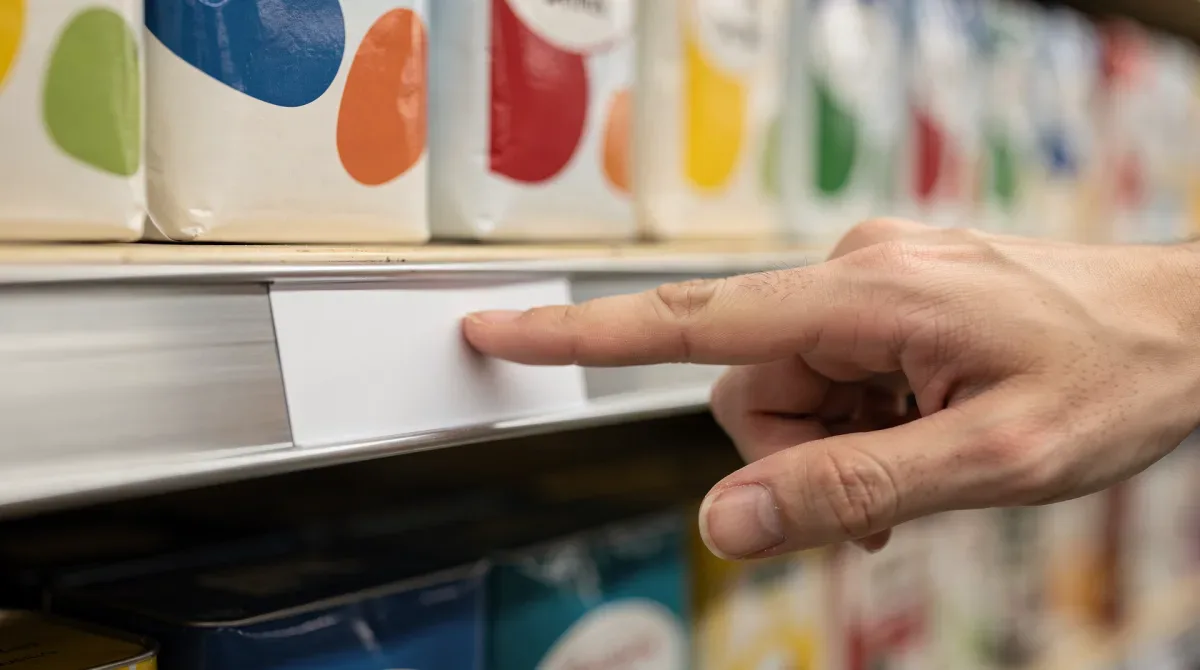
Walk down any grocery aisle and you will see shelf tags with a large price and, somewhere in a corner, a much smaller figure followed by "per oz," "per count" or "per 100 sheets." That small figure is the unit price, and it is one of the most reliable tools a shopper has for comparing products of different sizes and brands.
It is also easy to ignore. The big number is designed to catch your eye, while the unit price sits in tiny print. Learning to read it takes a few seconds per item and can change what ends up in your cart, especially for staples like rice, coffee, detergent, paper towels and diapers.
What the unit price tells you
The unit price is the total price divided by a standard measure, such as ounces, pounds, fluid ounces, count or sheets. It answers one question: how much am I paying for each unit of product, regardless of the package size?
That matters because packaging can be misleading. A box that looks bigger may contain less product, a "family size" may cost more per ounce than two regular packs, and a sale price on a small size can still be worse than the regular price of a larger one. The unit price cuts through all of that.
Where to find it
On most shelf tags the unit price appears on the left side or in a smaller box, labeled with the unit used. Many store apps and websites also show it next to the product price when you shop online. Unit pricing rules come from state and local regulations, so the format and even whether it is required can vary by state. The National Institute of Standards and Technology publishes guidance on unit pricing for states that adopt it, available at nist.gov.
Comparing sizes and brands the right way
To compare fairly, make sure both tags use the same unit. One tag might show price per ounce while a neighboring one shows price per pound, or one paper towel brand lists price per roll and another per 100 sheets. When the units differ, the comparison is meaningless until you convert.
- Weight and volume: compare ounces to ounces, fluid ounces to fluid ounces.
- Paper goods: per sheet or per square foot is better than per roll, because "double" and "mega" rolls are not standardized across brands.
- Laundry detergent: per load is often more useful than per ounce, since concentrations differ.
- Diapers and wipes: per count works well, as long as you compare the same size.
When the bigger package is not cheaper
Bulk usually lowers the unit price, but not always. Sales and coupons are often applied to smaller sizes, which can push their unit price below the larger package. Store brands in a small size can also beat name brands in a jumbo size. Always check rather than assume.
Unit price and sales: putting it together
Shelf tags for sale items may show the unit price at the sale price, the regular price, or both, depending on the store's tag system. If you are using a digital coupon or a quantity deal, the tag will not reflect your final cost. In that case a quick calculation on your phone helps: divide what you will actually pay by the number of units.
| Situation | What to compare |
|---|---|
| Two sizes of the same product | Unit price on each tag |
| Name brand on sale vs store brand at regular price | Sale unit price vs store brand unit price |
| Item with a digital coupon | Your final price after coupon, divided by units |
| Multi-buy deal (buy several, save) | Total paid for the set, divided by total units |
Factors the unit price does not capture
The lowest unit price is not automatically the best buy. A few things the number cannot tell you:
- Waste: a big bag of produce or a large tub of yogurt is only cheaper if you finish it before it spoils.
- Storage: warehouse-size paper goods need somewhere to live.
- Quality and fit: a cheaper diaper that leaks or a detergent that needs double doses can cost more in practice.
- Cash flow: buying a large size ties up more money today, which matters on a tight budget.
What it really saves, and the catch
Unit pricing rarely produces dramatic savings on a single item, but used consistently across a full cart it steers you toward the better value in each category. Over months, that habit adds up, particularly on items you buy every week.
The catch is consistency of labels. Tags can be wrong, outdated after a price change, or use mismatched units. If something looks off, check the package size yourself and do the math. If the price at the register does not match the shelf, many stores will correct it, so ask customer service about their pricing accuracy policy.
Frequently asked questions
Is unit pricing required in every state?
No. Requirements vary by state and sometimes by locality, and some states leave it voluntary. Most large chains display unit prices anyway, but formats differ.
Why do two similar products use different units on their tags?
Tag systems sometimes assign units by product category or by how the manufacturer labels the package. When units differ, convert them yourself before comparing.
Should I always buy the item with the lowest unit price?
It is a strong starting point, but also consider whether you will use it all, whether you have storage space, and whether the cheaper product works as well for your household.
Written by
alldailyfinds.com Editorial Team
The alldailyfinds.com editorial team researches deals, coupon policies and free-sample programs for U.S. shoppers and checks each offer against the retailer's or brand's own published terms. alldailyfinds.com is published by Holy Media Ltda.