
When buying in bulk saves money and when it backfires
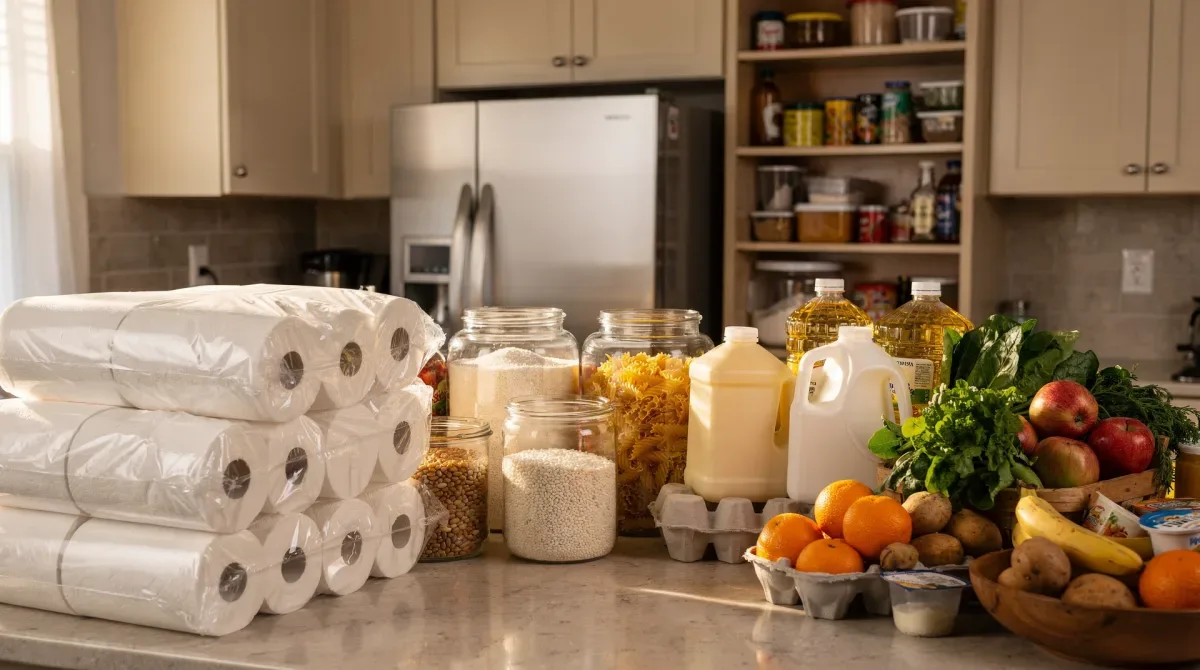
Buying in bulk has a reputation as the obvious way to save. A giant pack of paper towels, a family-size bag of rice or a case of canned tomatoes usually costs less per unit than the smaller version. But anyone who has thrown out half a tub of spinach or a forgotten bag of stale chips knows that a lower unit price only matters if you actually use what you bought.
Bulk buying works brilliantly for some items and quietly drains money on others. The difference comes down to three things: how fast you use it, how long it keeps and whether you have room to store it. Here is how to sort everyday essentials into the right piles.
The real math behind bulk
A bulk deal saves money only if three conditions are true:
- The unit price is genuinely lower. Not always the case; sales on smaller packages can beat bulk prices.
- You use all of it before it spoils or loses quality. Waste erases the savings fast.
- You would have bought it anyway. A bulk pack of something new is a gamble, not a saving.
There is also a cash flow cost. Spending a larger amount at once can squeeze the rest of your budget for the week. If a bulk purchase means putting other essentials on a credit card that carries a balance, the interest can eat the savings.
Items that are usually good bulk buys
Products that last a long time and that your household uses steadily are the classic winners:
- Toilet paper and paper towels, if you have storage space.
- Laundry detergent and dish soap, once you know which ones you like.
- Dry staples such as rice, dried beans, oats and pasta, stored airtight.
- Canned goods you use regularly, rotating older cans to the front.
- Trash bags, food storage bags and aluminum foil.
- Frozen vegetables and fruit, if your freezer has room.
- Personal care basics like toothpaste, soap and deodorant your family always uses.
- Pet food, as long as you can store it sealed and your pet will eat it before it goes stale.
Items that often backfire in bulk
- Fresh produce, unless you have a plan to use or freeze it.
- Bread and baked goods, which go stale or moldy quickly unless frozen.
- Dairy with short dates.
- Cooking oils and nuts, which can go rancid with time.
- Spices, which lose flavor over time; large containers rarely get used up.
- Condiments and sauces that need refrigeration after opening.
- Snacks, which tend to be eaten faster when there is a lot on hand.
- Anything new to your household. Test with a small size first.
The snack effect
A big bag of snacks may cost less per ounce, but many families find they simply eat more when more is available. If a bulk box of granola bars disappears in the same time a small box would have, you saved nothing and spent more.
A quick decision table
| Question | If yes | If no |
|---|---|---|
| Do we use this every week? | Good bulk candidate | Buy a regular size |
| Does it keep for months unopened? | Good bulk candidate | Buy only what you will use soon |
| Do we have space to store it well? | Go ahead | Clutter and damage risk |
| Is the unit price lower than the regular sale price? | Real savings | Wait for a sale on the small size |
| Can we afford it without straining the budget? | Buy | Buy smaller now, bulk later |
Storage makes or breaks bulk savings
Bulk only works if what you buy stays in good condition. A few habits help:
- Store dry goods in airtight containers to keep out moisture and pests.
- Freeze bread, meat and some produce in meal-sized portions.
- Label containers with the date you opened or froze them.
- Rotate stock: new purchases go to the back, older ones to the front.
- Keep an eye on the space you are giving up. A closet full of paper towels is a cost too, especially in a small home.
Splitting bulk with others
If a bulk deal is good but too large for your household, consider splitting it with a friend, neighbor or relative. You get the lower unit price without the waste. Agree in advance on who pays what, and divide items as soon as you get home.
Where to compare bulk prices
Warehouse clubs are known for bulk, but they are not the only option. Supermarkets often have large sizes and family packs, big-box stores carry value sizes and online retailers sell multipacks. Prices vary by item, so comparing unit prices across stores for the items you buy most is more reliable than assuming any one store is always cheapest.
It also helps to watch regular sales. A smaller package on a good sale sometimes beats the everyday bulk price, which is why keeping a rough idea of normal prices for your staples is so useful.
Frequently asked questions
Is buying in bulk always cheaper?
No. The unit price is often lower, but not always, and sales on regular sizes can beat it. Bulk is only cheaper overall if you use everything before it goes bad.
What should a small household buy in bulk?
Focus on long-lasting items you use steadily, like toilet paper, dish soap, rice or canned goods. For perishables, buy smaller sizes or freeze portions right away.
How do I avoid waste when buying in bulk?
Buy only items you already use, store them properly, freeze portions of perishables and rotate older stock to the front so it gets used first.
Written by
alldailyfinds.com Editorial Team
The alldailyfinds.com editorial team researches deals, coupon policies and free-sample programs for U.S. shoppers and checks each offer against the retailer's or brand's own published terms. alldailyfinds.com is published by Holy Media Ltda.